By The LeatherWerks Daddy
Alright boy, pull up a chair. We need to talk about leather.
Not the shiny stuff you see in window displays. Not the plastic coated garbage that cracks after one sweaty night at the bar. I mean real leather. The kind that has weight when you hold it. The kind that smells like earth and work and sex all at once. The kind that carries you through a scene and brings you back out the other side.
If you are looking for perfection, you are shopping in the wrong place. And honestly? You are thinking about this all wrong.
What Real Leather Actually Is
Here is the truth they do not tell you at the mall. Leather is skin. It came from an animal that lived outside, moved around, got scratched by branches, rubbed against fences, aged under the sun. That life leaves marks. And those marks do not wash off.
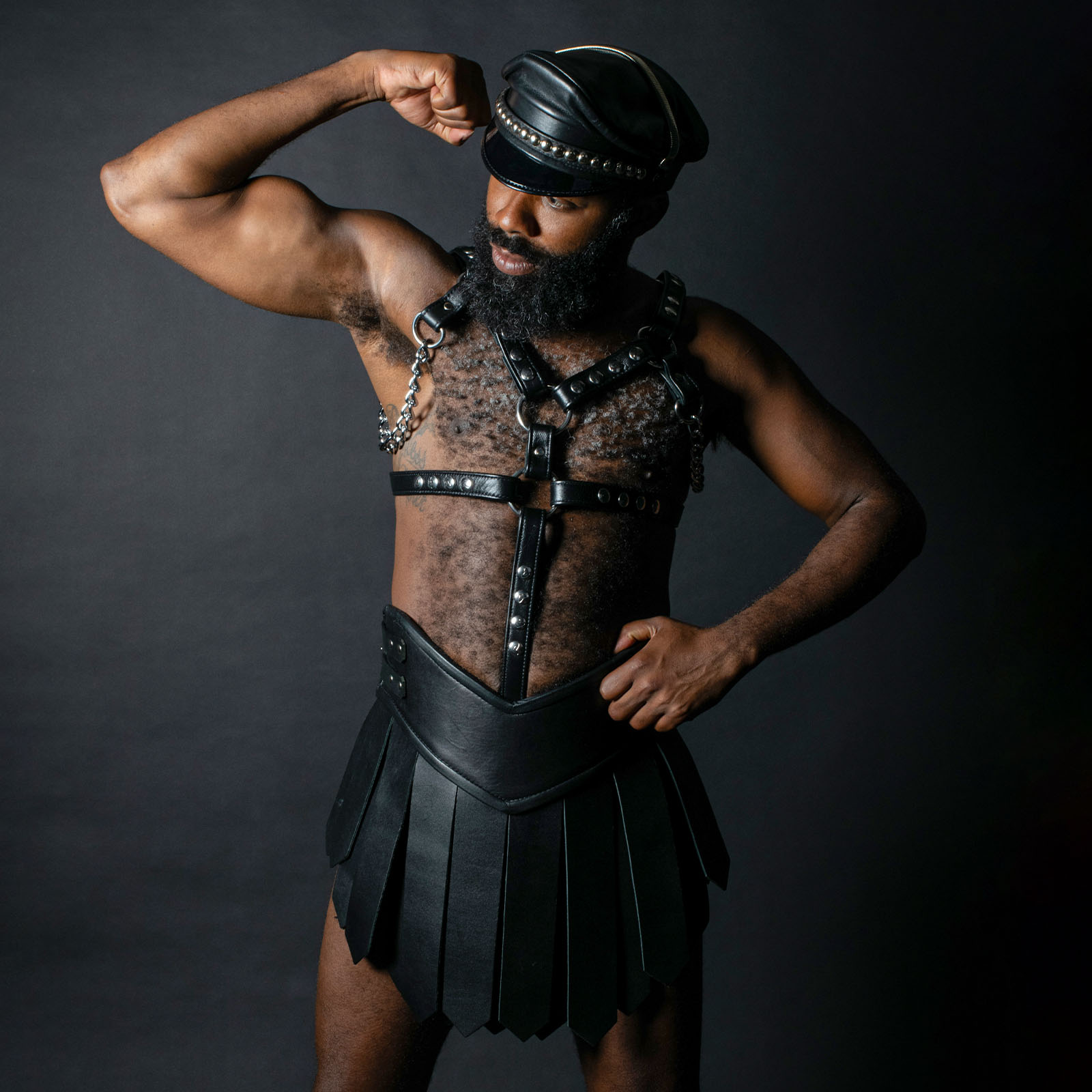
When you strap into a heavy harness or zip up a uniform shirt, you should feel it. The weight on your shoulders. The texture against your palms. The resistance when you pull a strap tight. And that scent. God, that scent. Rich and dark and alive. That is not a fragrance they bottle. That is the real thing talking to you.
These qualities are not accidents. They are the whole reason we use leather in the first place.
The Marks Are the Point
Every hide is different. That is not a sales pitch. That is biology.
You might see grain that shifts across the surface. Color that deepens in one spot and lightens in another. Small scratches from a branch the animal brushed against. Healed scars. Wrinkles where the skin folded naturally. These are not defects. They are not flaws. They are not reasons to send something back.
They are proof.
Proof that your gear is genuine. Proof that no one else on earth owns a piece exactly like yours. Proof that this material lived before it became yours, and that it will keep living as it molds to your body, your heat, your movement.
At LeatherWerks, our craftsmen inspect every hide before it ever touches a blade. Sections that lack strength, or that compromise the structure of the finished piece, are cut away and discarded. What remains is selected specifically to perform. Under tension. Under body heat. Under the kind of play that tests everything.
When “Perfect” Means Fake
Now let me tell you what to watch out for. Because there is a whole industry built on selling you the idea that leather should look like it was printed.
A perfectly uniform surface usually means one of two things. Either the hide was sanded down, coated over, and processed until every bit of character was erased. Or it is not leather at all. It is synthetic. Plastic dressed up to fool you.
Heavy surface coatings feel slick and cold. Embossed textures try to mimic natural grain by stamping a fake pattern on top. These treatments create consistency, sure. But they kill what makes leather worth wearing in the first place. The natural feel. The way it breathes. The way it ages and darkens and softens exactly where your body touches it.
Plastic traps sweat. It cracks under stress. It fails when you need it most. And it never, ever smells right.
If your harness looks like it rolled off an assembly line, it probably did. And assembly line gear has no business in a real scene.
What to Look For Instead
When you are investing in gear, whether you are buying it yourself or someone is buying it for you, look for honesty.
Full grain or top grain construction. Natural edges that have not been painted over to hide what is underneath. Hardware that matches the weight of the leather. Solid buckles. Welded rings. Stitching that will not pop when someone pulls hard.
And look for a maker that tells you the truth. A brand that says, yes, this leather has variation, and here is why that is a good thing. That transparency matters. It means they respect the material. And if they respect the material, they probably respect the person wearing it too.
Breaking It In
Here is the secret no one mentions. Real leather gets better. Not over years. Over weeks. Sometimes days.
It darkens at stress points. Softens where your body presses against it. Absorbs your scent, your sweat, your heat. Gradually, piece by piece, it stops being a product and starts being yours.
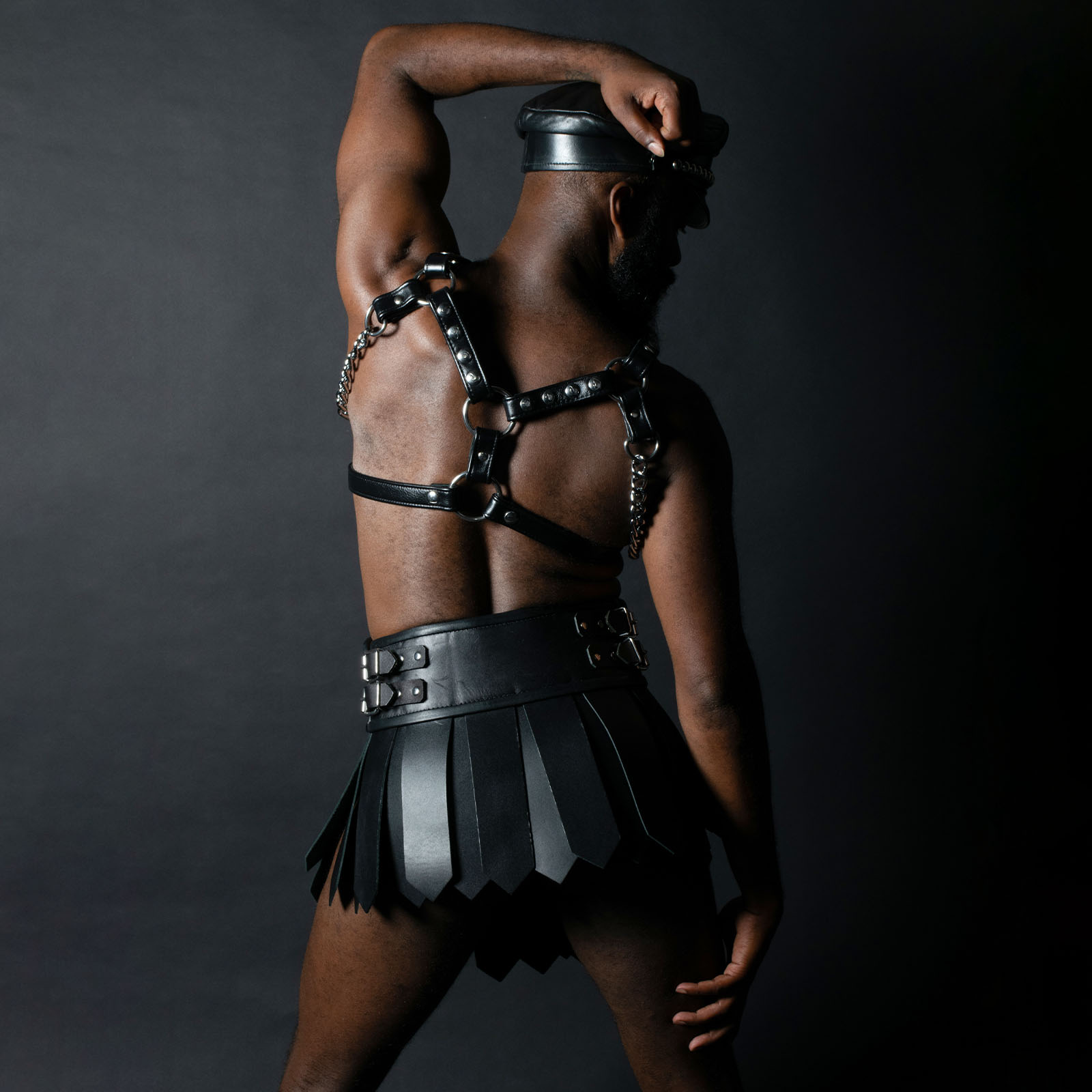
That break in period? That is not a flaw. That is courtship. The leather is learning your shape. You are learning its limits. By the time it has molded to your chest, your shoulders, the curve of your back, it is not just gear anymore. It is part of you.
That is the difference between wearing something and owning something.
Take Care of It
You look after your boy when a scene ends. Look after your leather the same way.
Wipe it down after heavy play. Condition it now and then with a quality balm. Not too much. Not too often. Just enough to keep the hide supple. Store it hung up or laid flat, away from direct heat and damp. Let it breathe. It is skin. It needs air.
Neglect it and it will stiffen. Crack. Fail you when it matters. Treat it with respect and it will outlast most of the relationships in your phone.
Why This Matters in a Scene
In a scene, your gear is part of the container. It holds the energy. It carries the symbolism. A synthetic harness might look fine under club lights, but when the door closes and the play gets real, you need material you can trust.
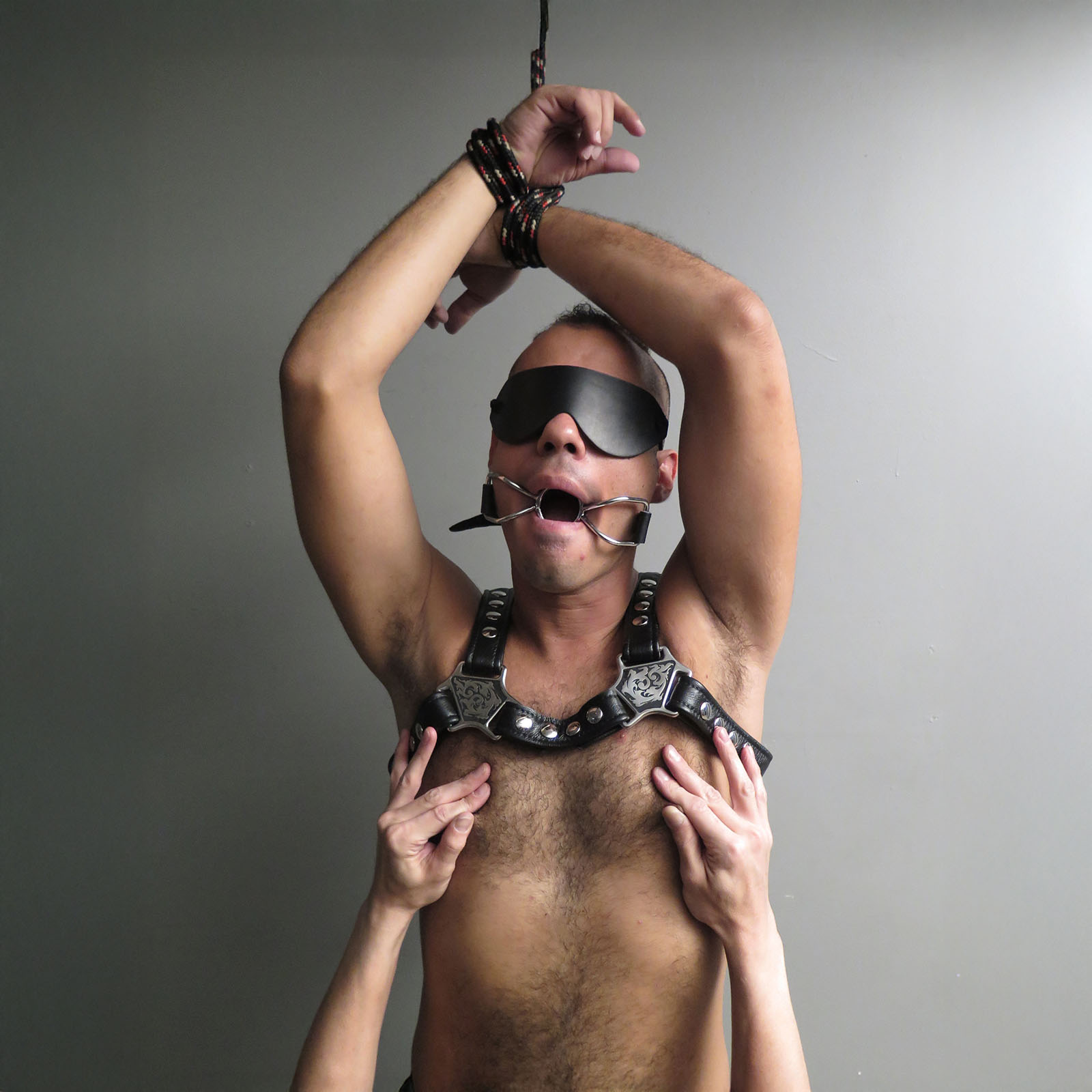
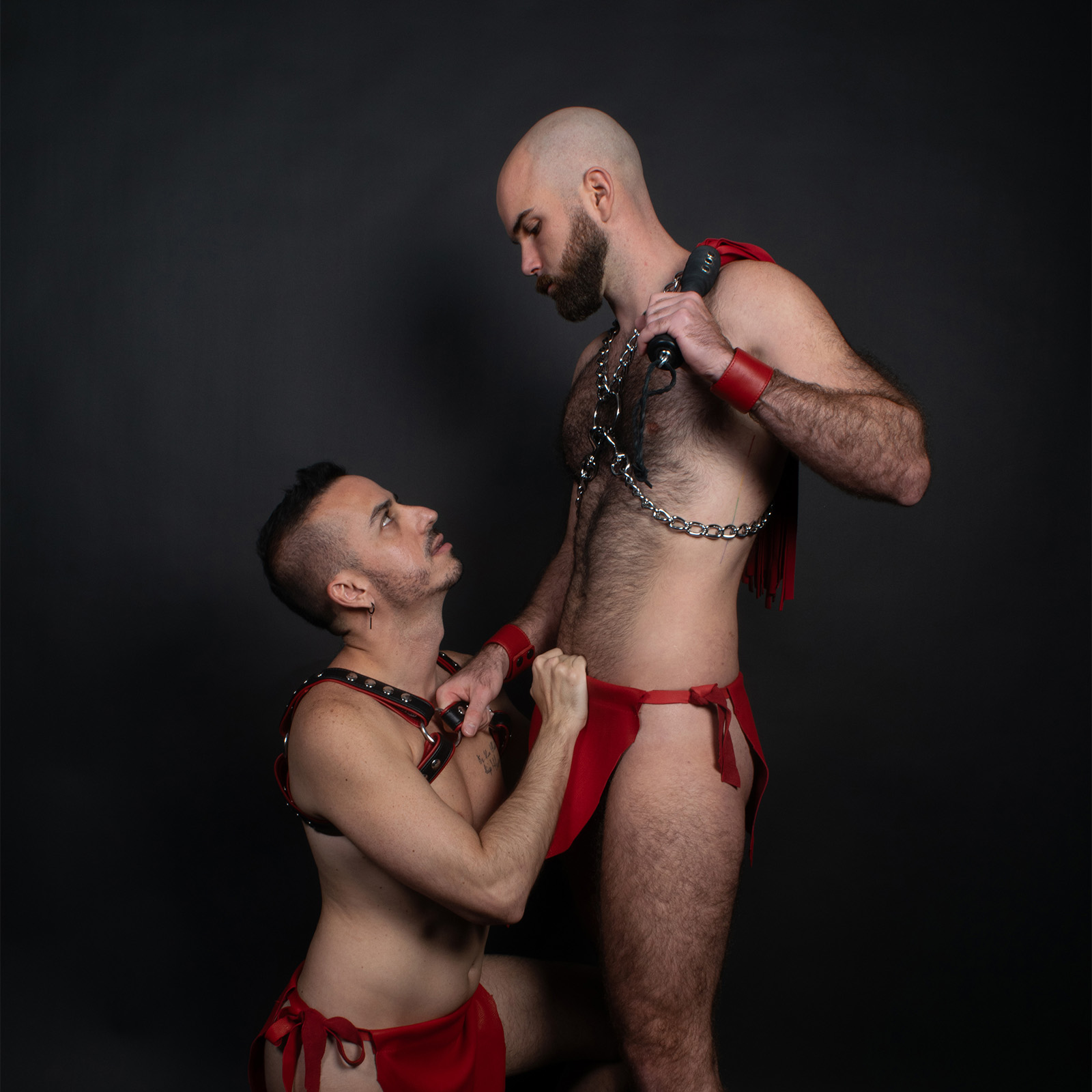
Real leather performs better. But more than that, it feels different. To the top holding the straps. To the bottom wearing them. To everyone in the room who knows the difference between playing dress up and stepping into something real.
You are not putting on a costume, boy. You are stepping into a legacy.
Final Thoughts from Daddy
Natural markings are part of the experience. They are evidence of the hide, the craft, and the authenticity of what you are wearing. They separate a tool from a toy. A ritual from a performance.
When you embrace the character of the leather, you are embracing something older than fashion. You are saying that beauty does not require perfection. That strength and honesty matter more than a flawless surface. A scarred hide that holds under pressure is worth infinitely more than a perfect imitation that snaps when tested.
Wear it hard. Make it yours. Let it carry you into the dark and bring you back again.
And if anyone asks why your gear is not perfect? Tell them Daddy said perfection is for people who are not brave enough to play for real.
Now go be a good boy. And earn that patina.
Glossary
Full Grain Leather: The highest quality layer of the hide, including the complete natural grain. The strongest and most durable option available.
Top Grain Leather: The second highest quality, lightly sanded to remove surface imperfections while retaining significant strength.
Genuine Leather: A broad marketing term that can include lower quality bonded or corrected leather. Not all leather labeled genuine is equal.
Embossed Leather: Hide that has been mechanically stamped with an artificial grain pattern to create visual uniformity.
Surface Coating: A plastic or synthetic layer applied over leather to create gloss or conceal natural variation.
Patina: The natural darkening, softening, and character development that occurs as leather ages with wear.
Grain: The natural surface texture of the hide, unique to each individual animal.
Structural Integrity: The strength and durability of leather and its ability to perform under tension, stress, and movement.
Conditioning: The application of oils or balms to leather to maintain suppleness and prevent drying or cracking.
Body Meld: The process by which leather gradually conforms to the wearer’s unique shape through body heat, movement, and time.